Description
Hand editioned in pencil
One of 100 copies only
Sizes: 500 x 700mm / 19.7″ x 27.6″ or 700 x 1000mm / 27.6″ x 39.4″
Paper:
Professional fine art paper. 100% cotton paper with a smooth surface texture – guarantees archival standards.
Our giclée prints are printed on exhibition standard Ultrachrome HDR archival ink system of the Epson 7890 LFP.
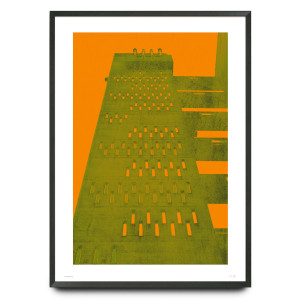
Brutalism Goldfinger’s Trellick Tower limited edition print additional information:
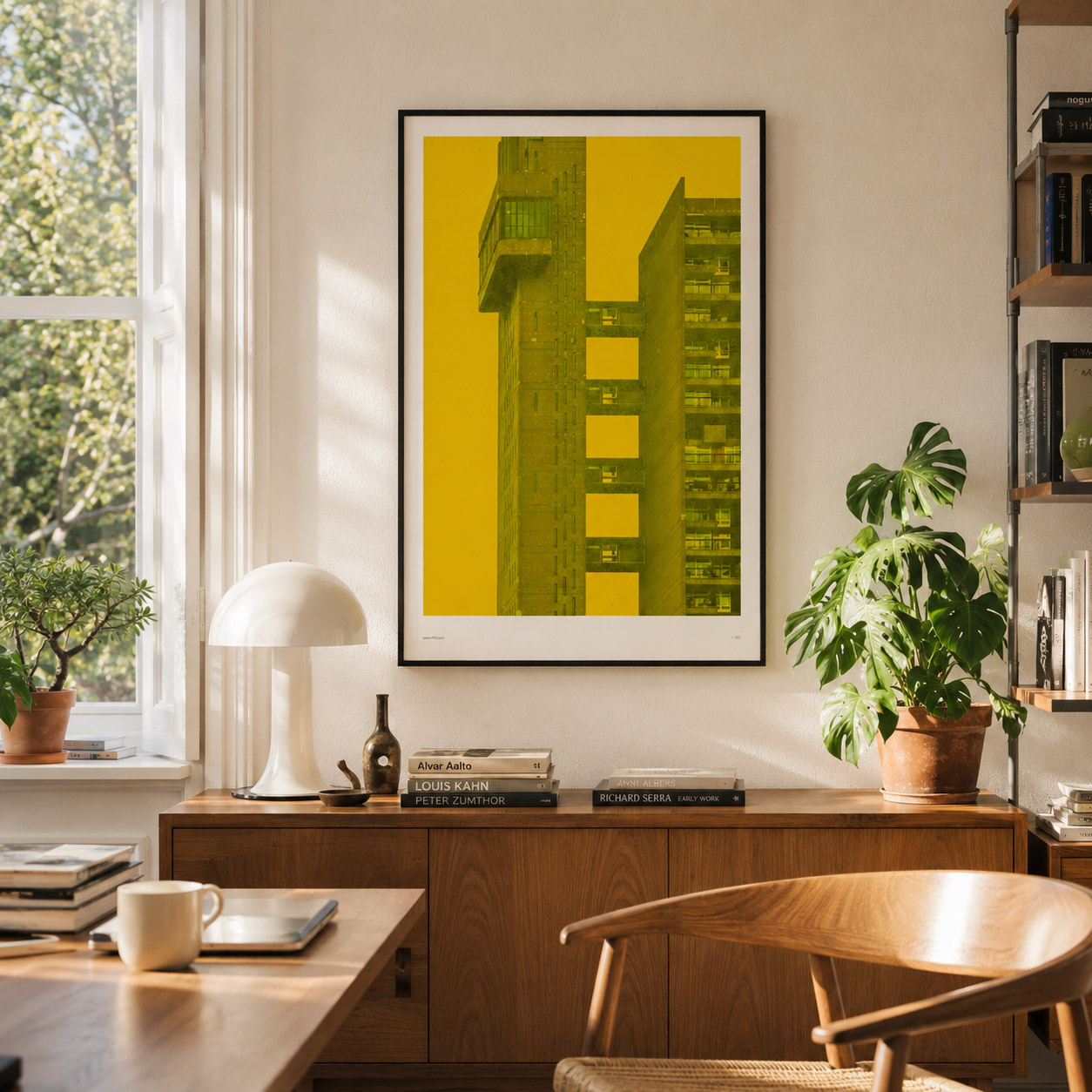
Please note, the frame is not included.
The colours of the print can vary from those shown on screen. We strive to make our colours as accurate as possible, but screen images are intended as a guide only and should not be regarded as absolutely correct.
Trellick Tower – The Brutalist Landmark That Refused to Fall
Trellick Tower needs little introduction. Ernő Goldfinger completed this 31-storey residential block in 1972. It stands on the skyline of North Kensington like a sentinel. For decades it divided opinion sharply. Today it stands as perhaps the most recognisable Brutalist building in Britain.
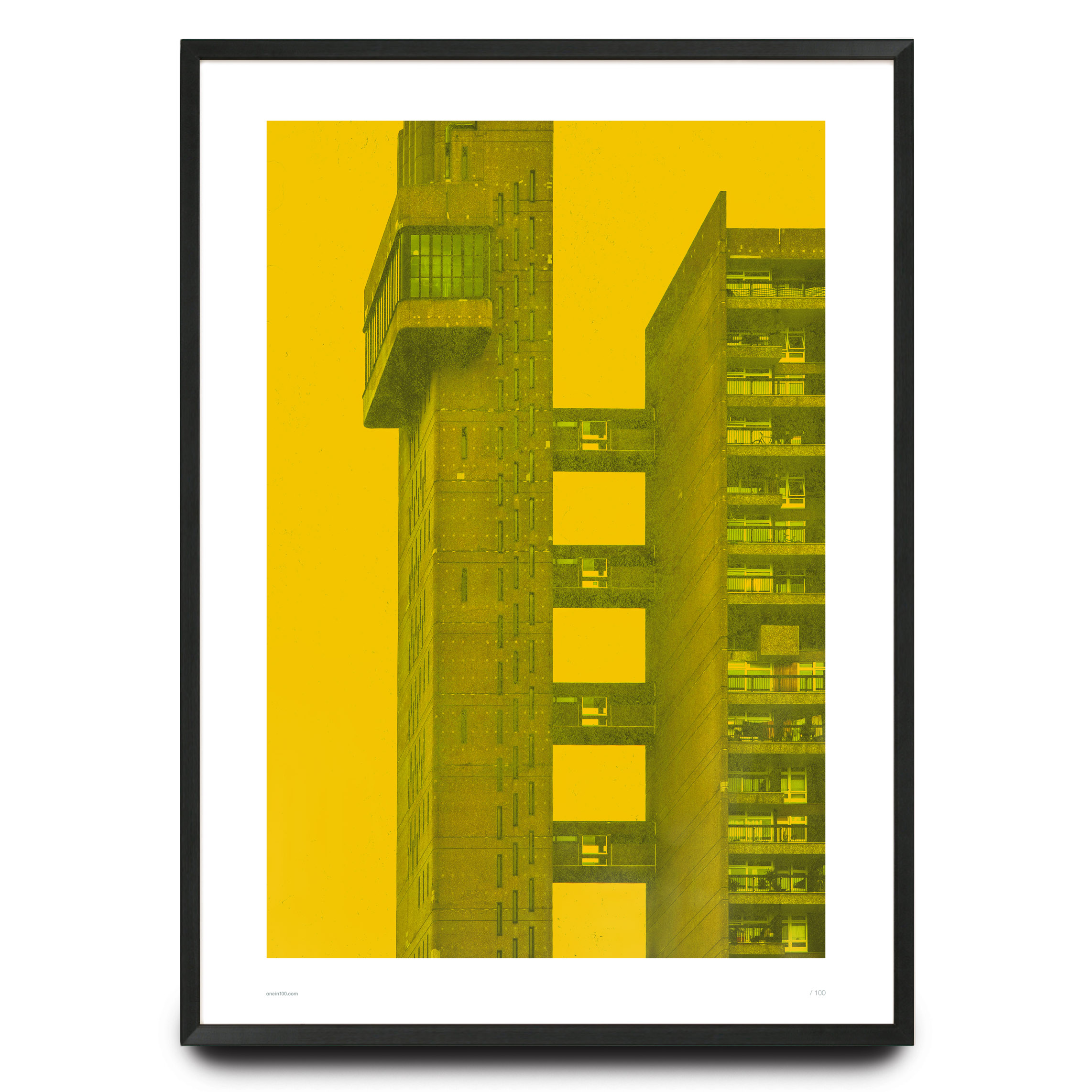
The tower owes its fame largely to its separate service tower. This slim vertical shaft houses lifts, stairs, and plant rooms. Enclosed walkways link it to the main residential block at every third floor. The design creates an unforgettable silhouette. It also serves a practical purpose. The separation keeps mechanical noise away from living spaces. Goldfinger first tested this concept at Balfron Tower in Poplar almost a decade earlier. At Trellick, he refined it. He made the tower taller, made the proportions more dramatic and created a genuine landmark.
The building’s early years proved difficult. Residents reported maintenance problems. The concierge system failed. Vandalism took hold in communal areas. By the 1980s, Trellick had gained an unwanted reputation. The tabloids branded it the “Tower of Terror”. Yet residents who stayed fought hard for their home. They formed tenant associations. They pushed for improvements. Slowly, the building stabilised.
Then something remarkable happened. Trellick Tower began its long climb from notoriety to icon status. Musicians referenced it. Artists photographed it. Fashion shoots used its concrete corridors as backdrops. The very features critics had mocked — the austere geometry, the raw concrete, the imposing scale — became the reasons people fell in love with it. In 1998, English Heritage granted it Grade II* listed status. The “Tower of Terror” had become a protected treasure.
Today, flats in Trellick command premium prices. Design pilgrims make their way to Golborne Road to photograph its facade. It appears on T-shirts, album covers, and countless Instagram feeds. The building that once symbolised the failure of post-war housing now represents something entirely different. It stands for resilience. For the idea that challenging architecture can reward patience. For the belief that concrete can be beautiful.
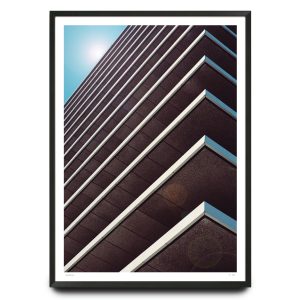
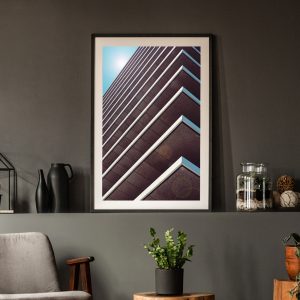
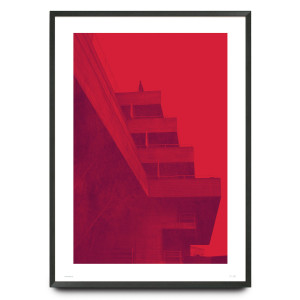
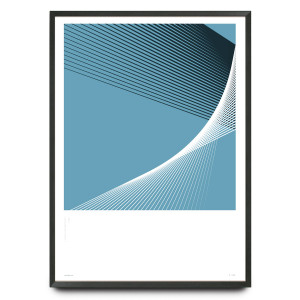
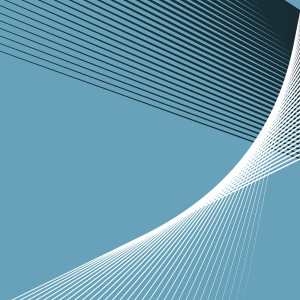
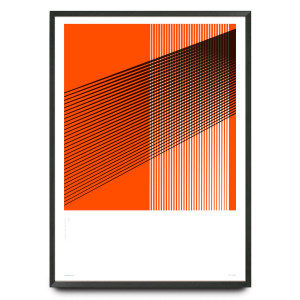
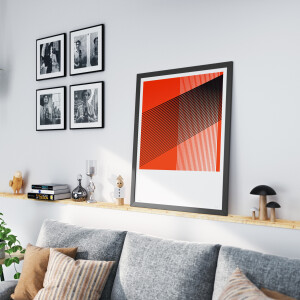
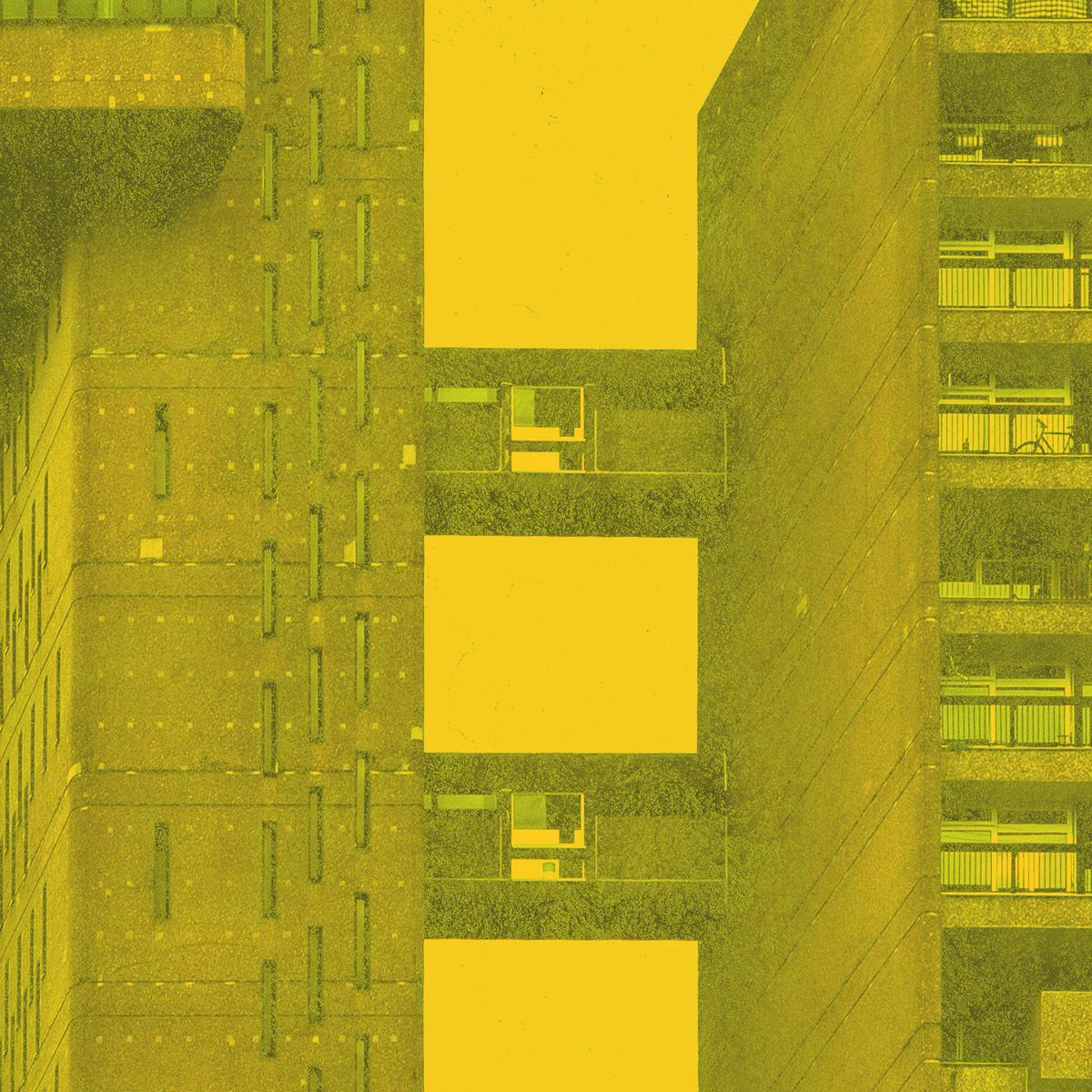
Our print captures Trellick Tower in its purest graphic form. It strips away context to focus on essential geometry. The grid of windows. The vertical lunge of the service tower. The sculptural play of light across the facade. It is a portrait of a building that refused to be defined by its critics.
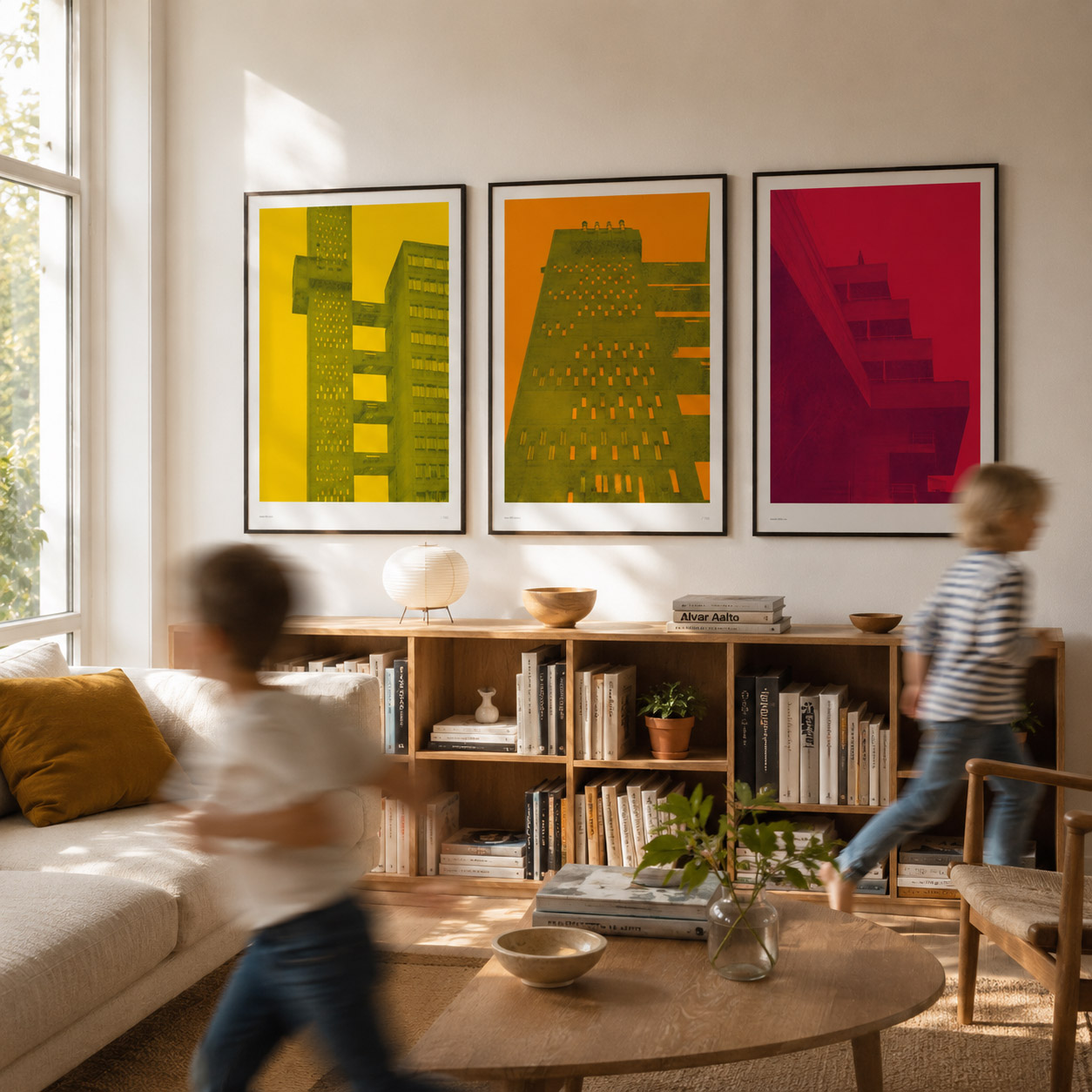
This piece pairs naturally with our Balfron Tower print. Together they tell the story of Goldfinger’s two great towers. Balfron, the prototype. Trellick, the perfected vision. Two landmarks that bookend one of the most remarkable careers in British architecture.